Description
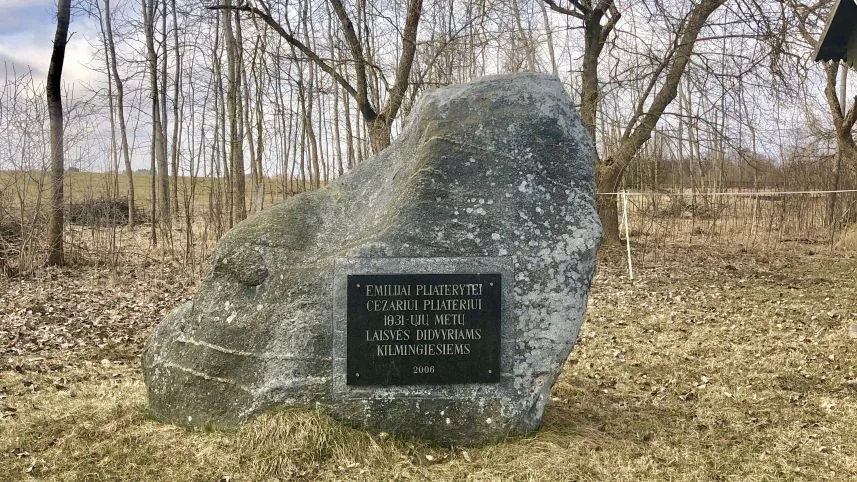
The history of the 1831 uprising is inseparable from the person of our native Emilia Pliaterytė. However, there were more women in the ranks of the rebels, they performed agitators, couriers, informers, weapons carriers and other functions, they tried not to stand out from the male team, so they usually dressed in men's clothes, but Emilija Pliaterytė became famous for her zeal to rush to the battlefield, and in addition to Emilija, her second cousins, Cezaris and Vladislovas Pliateri from Duset, also distinguished themselves in the insurrection. in 1831 In April, after losing the battle near Dusetė, the Pliaterians continued to fight in various parts of Lithuania. Finally, after a series of losing battles, the rebel leadership decided to retreat to Prussia and be interned there. Emilija Pliaterytė could not withstand the march towards Prussia and died in the Justinavas estate (now Vainežeris village, Lazdija district), while Cezar and Vladislaus Pliateri managed to escape to France. Less than a year after Emilia's death, her biography was already printed in Paris, books were published in various foreign languages, plays were staged, and her life was surrounded by legends. The Dusetai manor, which became the center of the uprising, was confiscated, the valuables inside were looted by the tsar's soldiers and the surrounding peasants. However, the mansion was not destroyed and after a long litigation, it was returned to Caesar and Vladislaus's mother, Apolinara Pliaterieni. But after her death in 1847 The Dusets manor went to the state treasury and was leased in installments. Tenants and peasants lived in the manor so much that in the 19th century by the end, only ruins were left of it. in 1967 In the village of Didžiavaris, on the site of the dilapidated Dusetai manor, the Sartų stud farm was established, and in 2006 November 23 commemorating the 200th anniversary of the birth of the heroine of the uprising, Emilia Pliaterytė, a memorial stone was unveiled here.