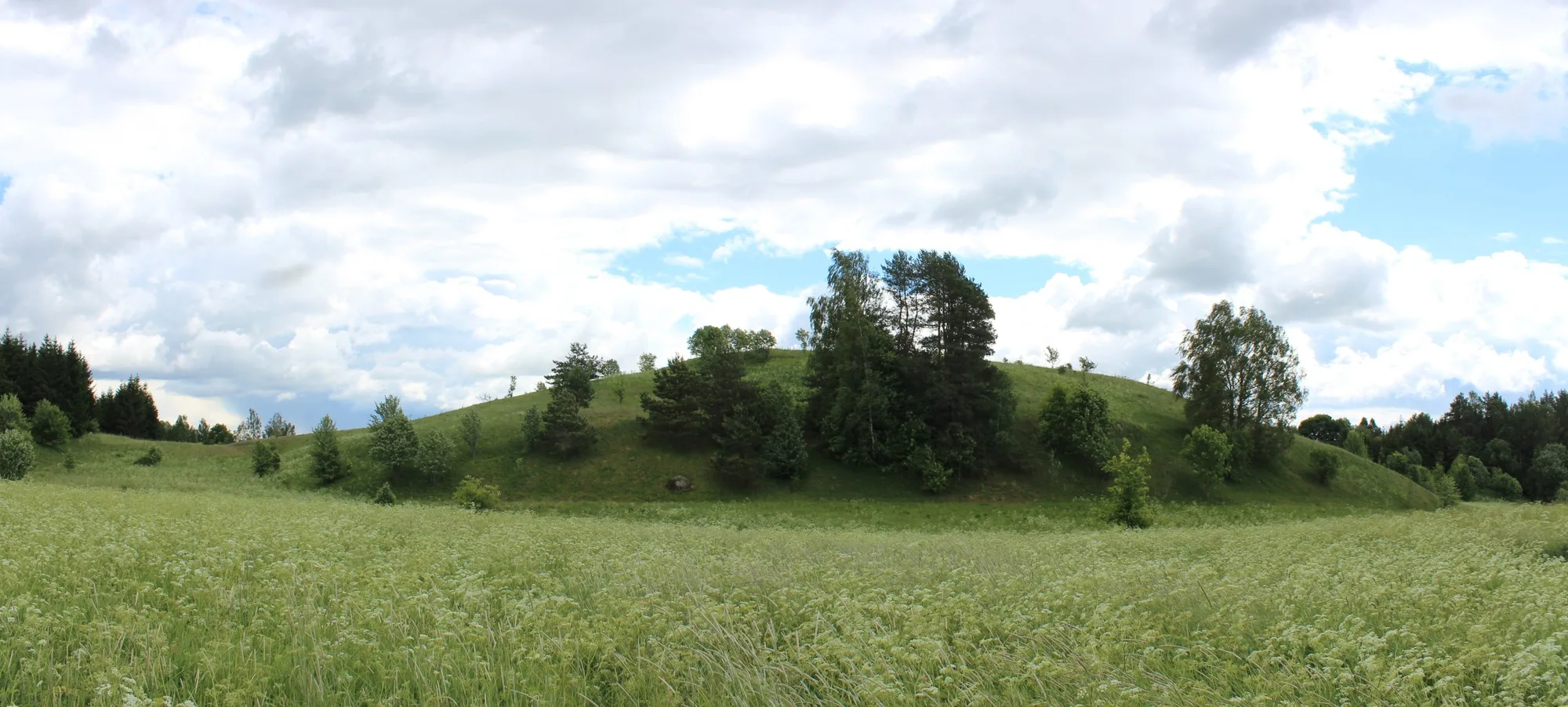
Description
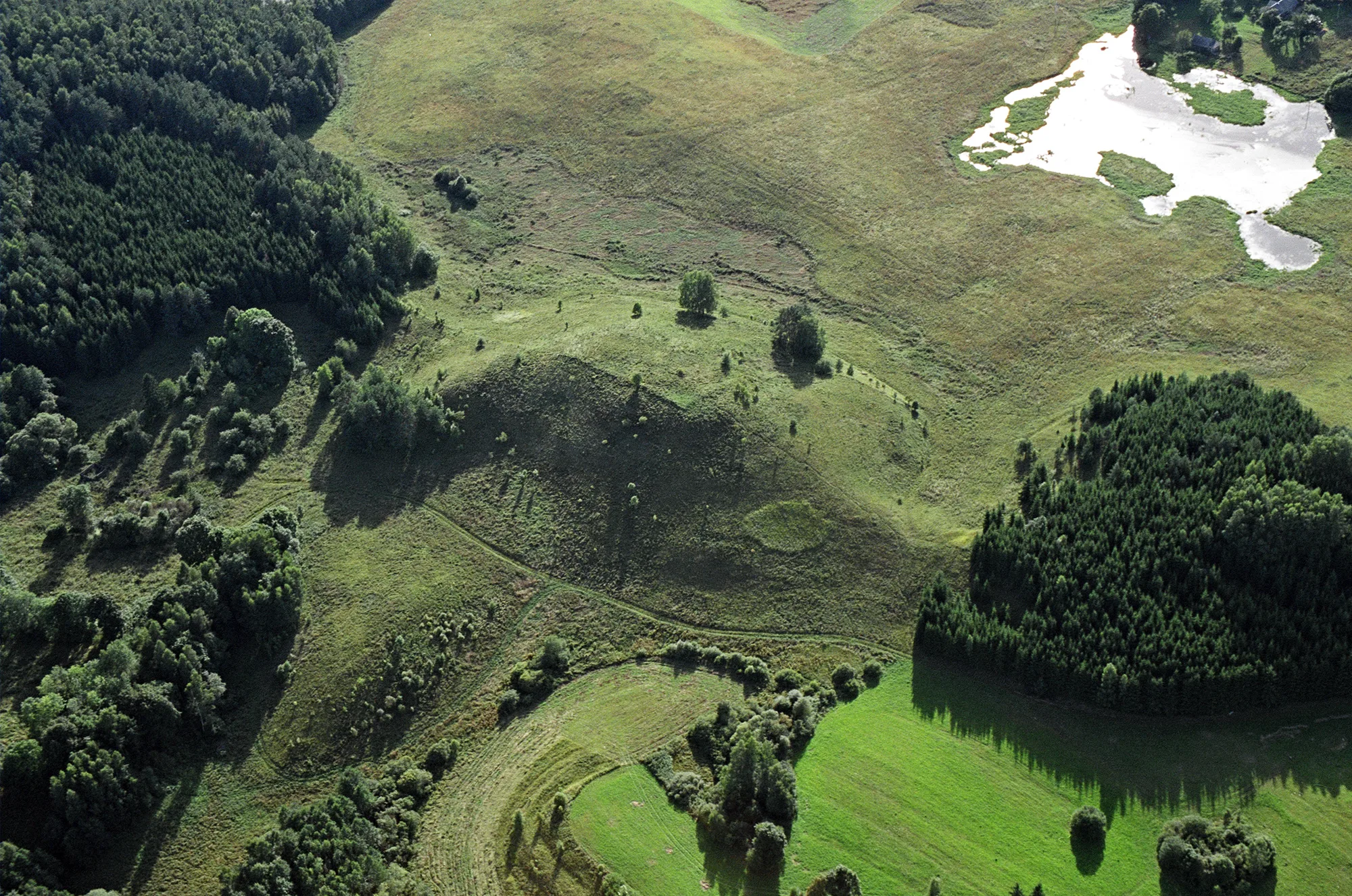
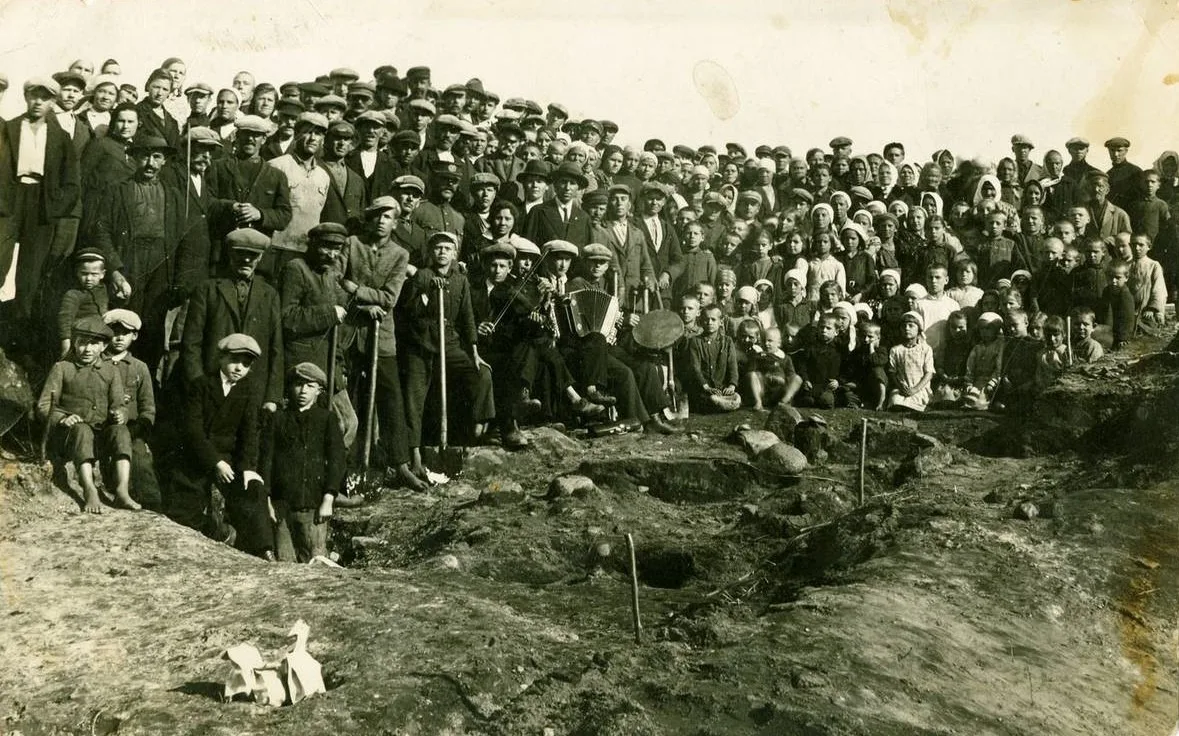
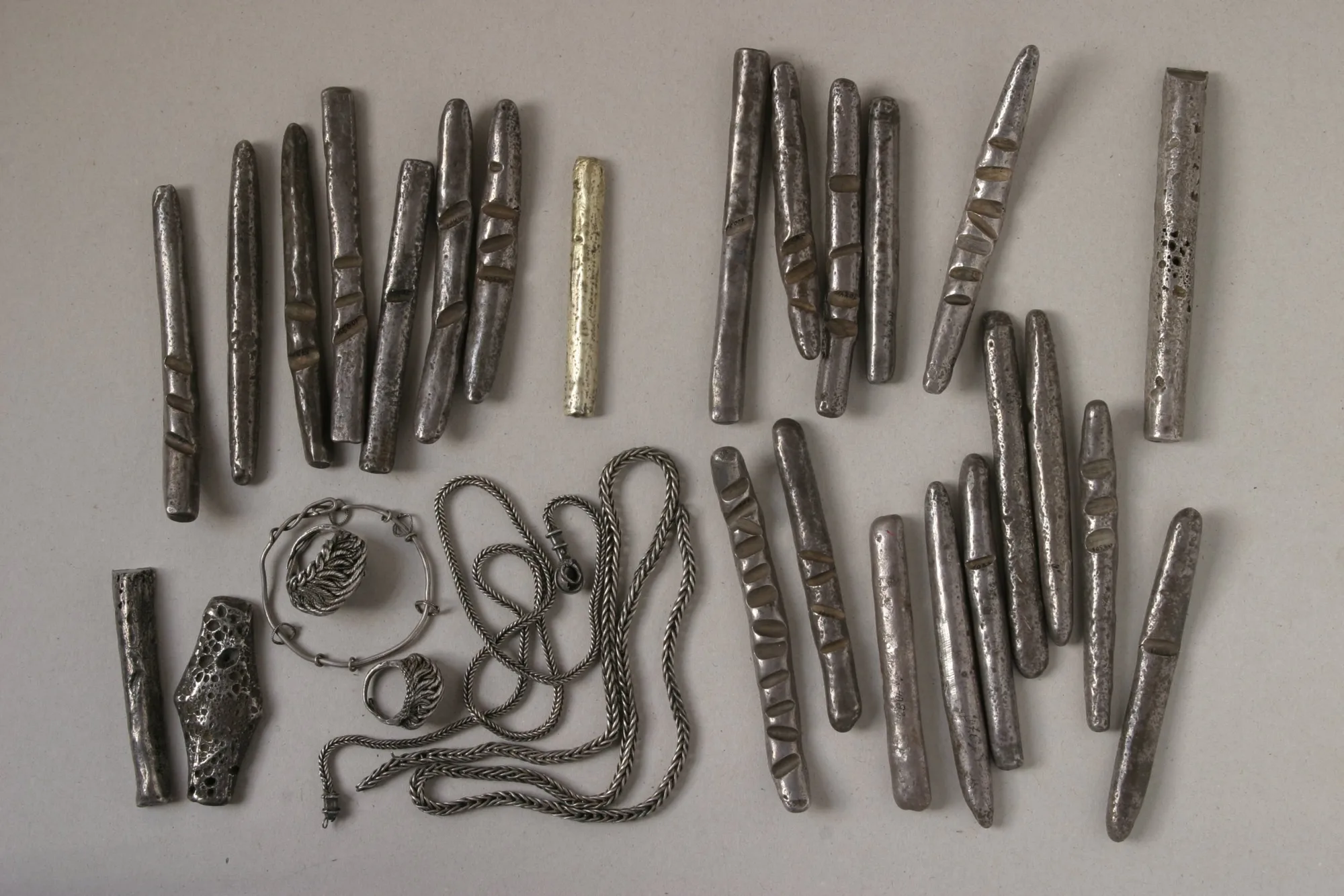
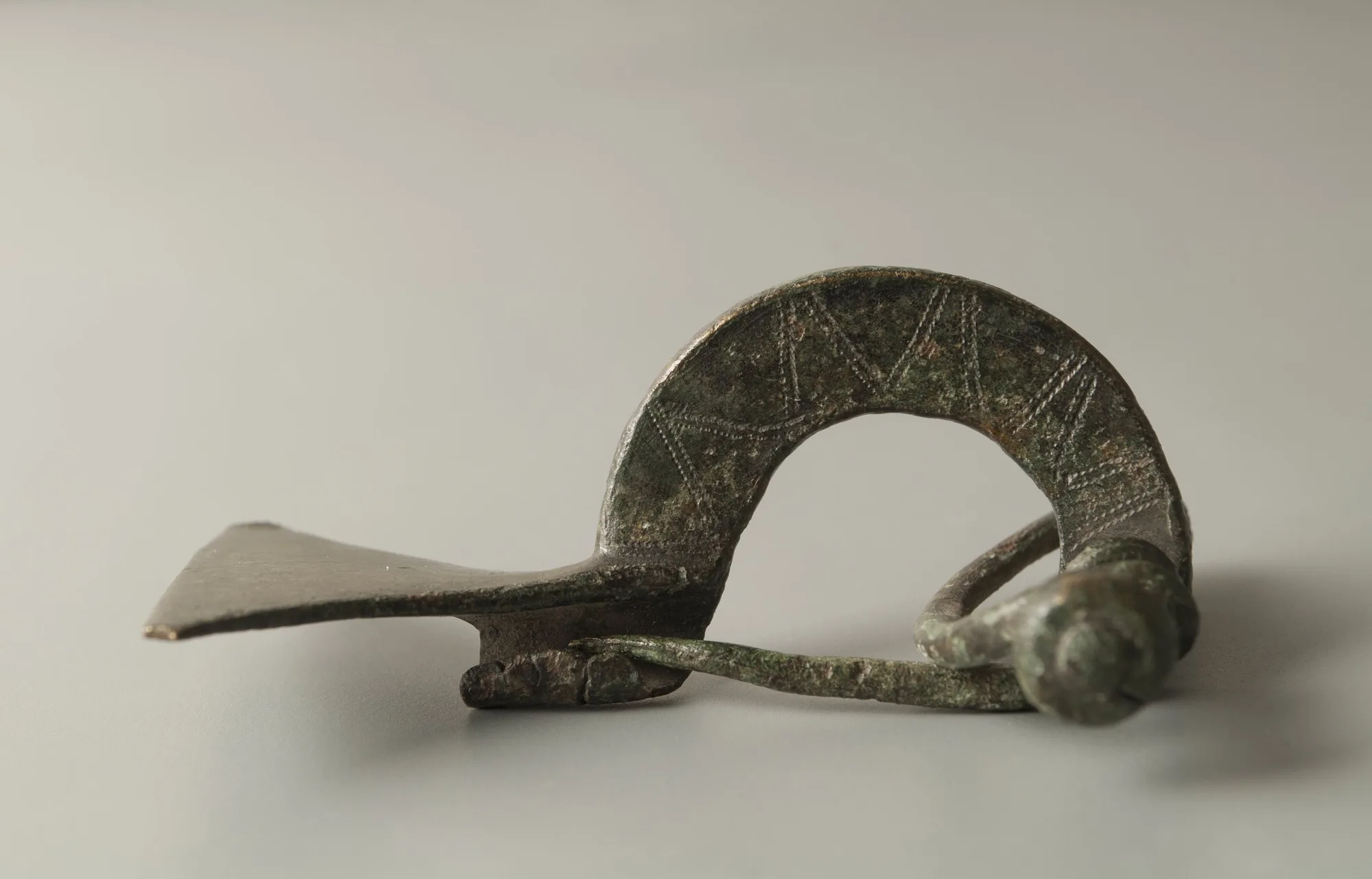
The Vosgėliai Hillfort is located on a large, isolated hill, about 700 m south of the village of Vosgėliai. In 1933, the hillfort was excavated by Petras Tarasenka, a retired colonel in the Lithuanian Army and an archaeologist. After examining an area of 144 m 2 , a cultural layer up to 1 m thick was discovered, containing iron arrowheads, a needle, a pot handle, a sickle, a brass tin, and bow-shaped brooches, a ring, stone axes, bone pins, arrows, a awl, clay spindle whorls, casting molds, and smooth, dotted, rough, and glazed pottery, as well as animal bones. Among the collected artifacts, the symbols carved on one bone awl stood out: a vertical dotted band, the sun, the moon in its crescent phase, and three stars. Research has established that the Vosgėliai hillfort was in use from the 1st millennium BCE until the very end of the 14th century. In 1934, in the village of Drageliškiai (within the territory of a settlement that once stood at the foot of the Vosgėliai hillfort), a hoard of silver alloys and jewelry dating from the 13th – early 14th century, consisting of 21 Lithuanian-style long silver ingots, a rod-shaped alloy of electrum (gold and silver), two Naugard-type silver alloys, one Kyiv hryvnia, three silver rings with a braided front, and two chains. There is no doubt that such a quantity of silver could have belonged only to a very wealthy individual—likely one of the local dukes—and was hidden when the enemy invaded the area. In the 16th–17th centuries, the Vosgėliai hillfort and the village near it were still called Gorodiščius or Vaituva (1686), but over time, both of these old place names disappeared completely, and by the first half of the 18th century, the area was known only as Vosgėliai. According to historian Dr. Tomas Baranauskas, this hillfort, located right on the border of the Sėla region, during its later period (after the tribal structure of the Selonians had already collapsed) can be linked to one of the three dukes of Nalšia who served on King Mindaugas’s council in 1260—Vaisgailis or Vosgėlis (Latin: Vesegel ), whom Mindaugas appointed as his governor after seizing the lands of his father-in-law, Plikis Ruškaitis. At least five place names in the region are also associated with this duke: for example, another Vosgėliai hillfort near Utena or the village of Vaisgailiai (Vaigeliškiai), which was located south of the Vasaknai manor. The prevalence of such place names in a small region only serves to confirm that they may have existed contemporaneously and reinforces the hypothesis outlined above.