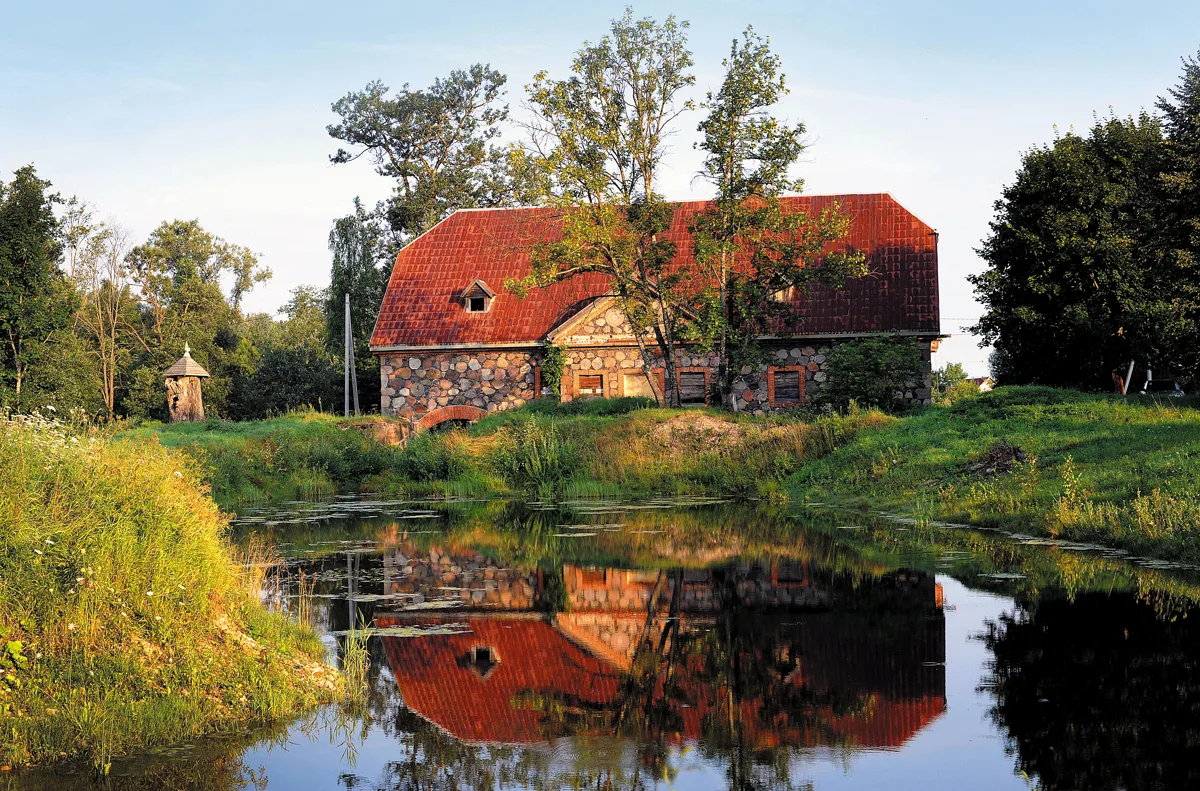
Description
Historical sources show that there was already a wooden water mill in Antalieptė in the 18th century; in 1754 the miller Kristijonas Hopas worked here. In 1782 a new mill, also wooden, was built on the site of the old one, and the Strutinskis family, lords of the Balčiai manor, leased it to various tenants. In 1855, through the efforts of Count Jonas Tiškevičius, owner of the Vasaknai manor, the present hewn-stone water mill building was erected on the site of the earlier mill; it stands out for features typical of Romanticism and folk architecture. The mill was built by local craftsmen – peasant masons – and the date of construction is attested by a stone set above the door of the western façade with the carved inscription “R.1855 H.J.T.”, indicating the builder and the year. In 1914, Countess Elžbieta Marija Tiškevičiūtė-Pliaterienė sold the Antalieptė water mill together with the entire Vasaknai manor to the landowner Vanda Grabovska-Modzelevska, but the First World War broke out that same year. During the fighting the mill was hit by an artillery shell and burned down. In 1918, Antanas Katinas from Utena acquired the ruins, rebuilt and modernised the mill and installed a generator that supplied the people of Antalieptė with electricity. After the Soviet occupation of Lithuania in 1940, the mill was nationalised but continued to operate until 1966, when it was abandoned, the dam dismantled and the canal filled in. After Lithuania regained its independence in 1990, the mill was returned to A. Katinas's daughter Leonilė Katinaitė, who passed it on to her relatives Jūratė and Jonas Puniai. In 2005, the Puniai family restored the mill building, re-excavated the canal and landscaped the surroundings. If you wish to visit the mill, please arrange your visit in advance.