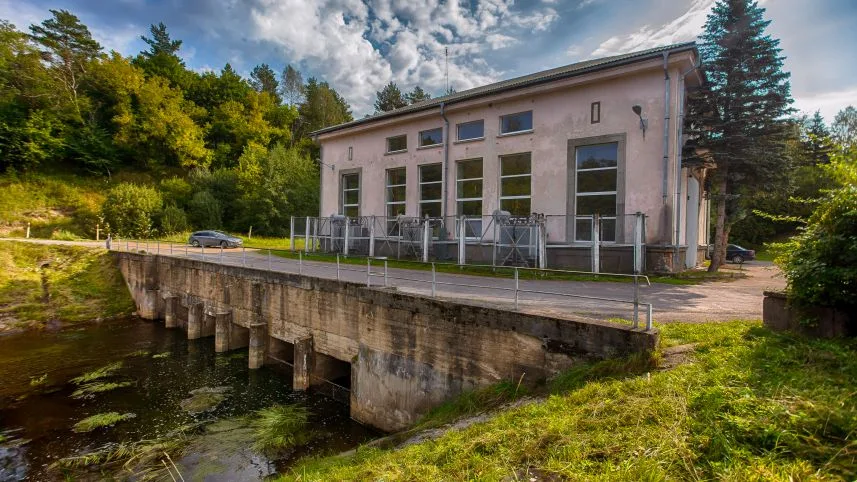
Description
Built in 1961, the power plant is a working monument of historical and technical heritage and the largest mountain-type hydroelectric power plant in the Baltic States – water flows through large pipes and falls onto the turbine wheels from a height of as much as 35 metres. For the needs of the plant the Šventoji River was dammed, forming, together with 26 lakes, the second-largest reservoir in Lithuania, known as the Antalieptė Lagoon. The plant was planned as early as the interwar period, since the rapidly expanding economy raised living standards and increased demand for electricity. For this reason, the Lithuanian Energy Committee was established in 1936, headed by Prof. Steponas Kolupaila. In 1937, S. Kolupaila and Kazys Pakštas came to Antalieptė and surveyed the surroundings and the Šventoji rapids, where the river drops 25 metres over a 5 km stretch. It was then estimated that a more powerful hydroelectric station could have been built here by 1944–1945. Because of the outbreak of the Second World War, construction never even began, and only in the 1950s did design work on the Antalieptė Hydroelectric Power Plant get under way, taking as long as 11 years. The Šventoji River was dammed in 1959, and in 1961 the Antalieptė Hydroelectric Power Plant was finally completed. Rising by seven metres, the water of the dammed Šventoji flooded 26 lakes, the largest of which are Dusetas (519.1 ha), Diegis (104 ha), Jūžintas (98 ha), Uolys (72 ha), Abisavas (61 ha) and Zazubras (46 ha), forming the Antalieptė Lagoon – a reservoir of rare beauty with the most complex shape in Lithuania and the country's second-largest artificial body of water. The interior of the facility is not open to visitors.