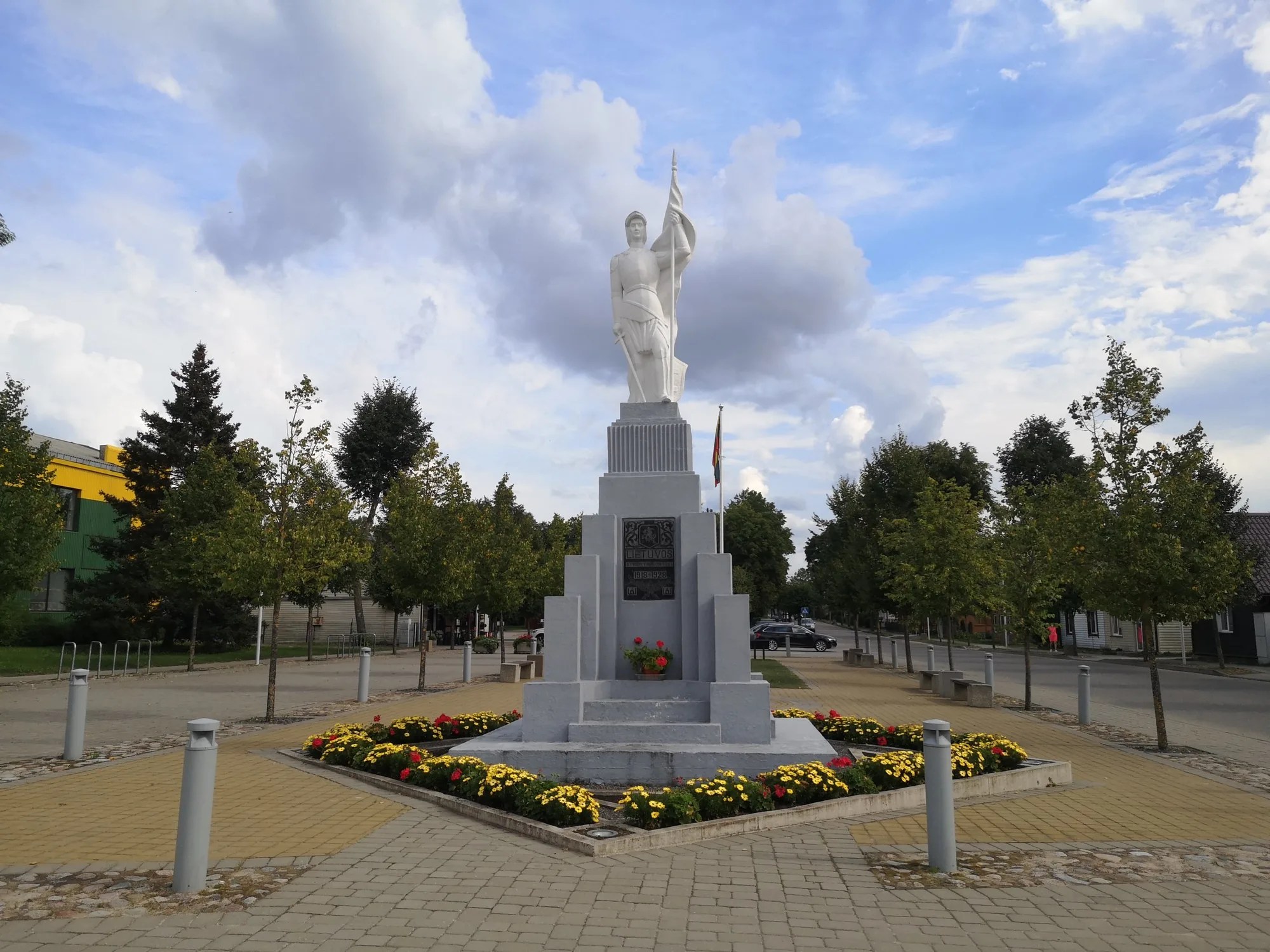
Description
Archaeological finds show that life was already bustling in the first half of the 15th century in the market square at the centre of the town of Dusetos; in historical times markets and fairs were often held here, and one of the town's synagogues stood beside the square. Interestingly, on 29 March 1831 Countess Emilija Pliaterytė rode into Dusetos and, mounted on her horse and raising the national flag, gave a speech urging people to rise up against the Russian Empire. After her inspiring speech, a multitude of volunteers gathered in Dusetos within about four hours, and the town became one of the centres of the uprising. After Lithuania restored its independence in 1918, the Dusetos square became a favourite meeting place for local organisations – the Ateitininkai, the Riflemen, the Scouts and the Pavasarininkai – and state holidays such as 16 February were celebrated here. In 1928 it was decided to erect a monument in the town square to mark the tenth anniversary of Lithuania's independence, and fundraising began. Only in 1930 were the concrete foundation, a flat platform and a stepped pedestal built, and in 1932 a concrete statue of an ancient warrior was placed on the pedestal. In 1952 the monument was demolished on the orders of the Soviet occupation authorities: the pedestal was buried and the statue thrown into Lake Sartai. After Lithuania regained independence in 1990, the pedestal was dug up, restored and re-erected in its original place, and a copy of the sculpture (by Vytautas Užpalis) was placed on it, since the original was never found. Photos by Sartai Regional Park